The Poetry of Hands: The Ultimate Filter of Excellence
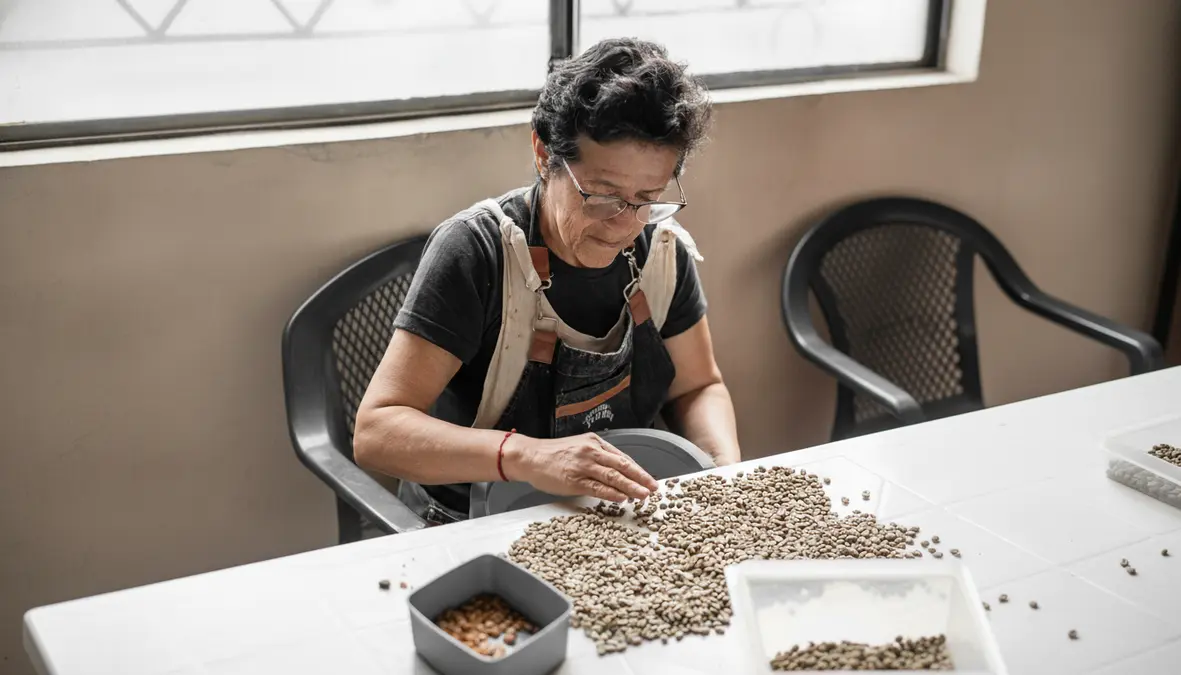
In the age of industrial automation, where algorithms and artificial intelligence guide most manufacturing processes, there is a corner in southern Ecuador where the most advanced instrument in the world remains the human eye and hand. In the Malacatos Valley, under the tempered light of Hacienda La Florida’s dry mill, a daily ritual of concentration and dexterity unfolds. Here, over specially illuminated sorting tables, a cascade of green coffee beans that have just been milled is poured. It is the prelude to the final shipment.
The movement of the hands is rhythmic, almost musical. A gentle slide separates a flawless, bright olive-green bean from another that shows an imperfection invisible to the untrained eye. This meticulous process, traditionally known in the Loja countryside as zarandeo or manual selection, represents the final bastion of the farm’s quality control. At Hacienda La Florida, this crucial role is not entrusted to machines, but to a team of expert women sorters from the rural communities of Sozoranga and Malacatos.
Achieving a “zero-defect” specialty coffee—the kind capable of surpassing the mythical 90-point barrier in international cuppings and competing on world barista stages—requires an absolute intolerance of imperfection. In this stubborn pursuit of liquid purity, the human touch is not simply an added value; it is an irreplaceable technical necessity.
The Insufficiency of the Digital Eye: The Limits of Technology
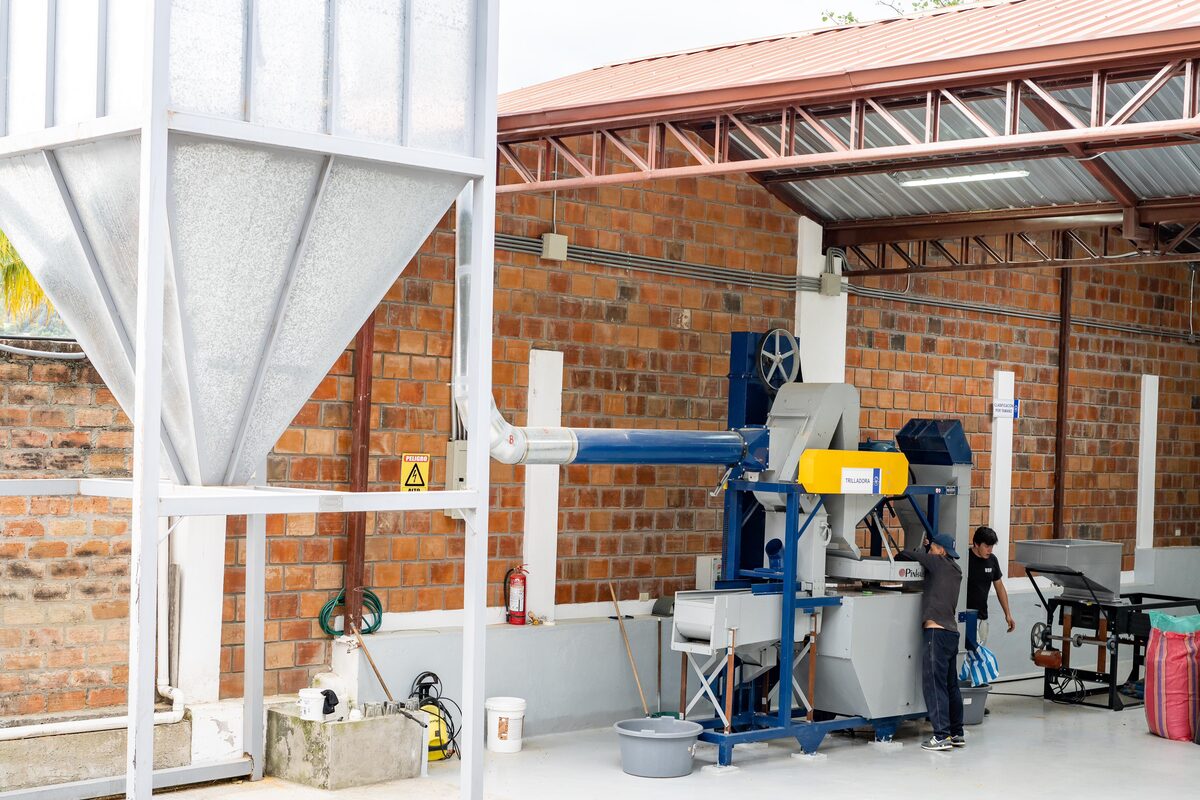
To the casual observer, the dry mill plant inaugurated by Hacienda La Florida in July 2025 might seem like the ultimate sanctuary of coffee technology. We have state-of-the-art optical color sorters capable of analyzing thousands of beans per second using multispectral sensors, and densimetric tables that separate floater beans using air currents and mechanical vibrations.
However, despite its astonishing speed, digital technology has insurmountable physical limits when it comes to ultra-premium specialty coffee:
- The Complexity of Color: An optical sorter operates under rigid parameters of chromatic contrast. If a bean has a natural variation in shade due to shade-ripening but its cellular structure is perfect, the machine may erroneously discard it. Conversely, a bean with severe internal defects but a uniform exterior color can bypass the sensor’s lens.
- Subtle Physical Defects: Minuscule mechanical damage occurring during the milling process (chipped or cracked beans), or light bites by the coffee berry borer (Hypothenemus hampei) that leave only a millimeter-sized pore on the surface, often go unnoticed by high-speed optical systems.
- The “Quaker” Factor: These beans come from underripe cherries. In their green state, their physical appearance and coloration can be identical to those of a mature bean. However, they lack the sugars and amino acids necessary to caramelize during roasting. After passing through the roasting drum, they remain pale and dry, contributing a stale peanut flavor, astringency, and dryness to the cup. The touch and sight of an experienced sorter detect the difference in density and rough texture of the green bean before it is roasted.
In specialty coffee microlots, a single defective bean can ruin an entire brew, introducing earthy, moldy, or astringent notes. Manual selection is the guarantee that only perfect beans cross the ocean.
Anatomy of a Defect: What the Sorter’s Eye Looks For
The training of our team of sorters takes years of constant practice. Their visual palate is calibrated to identify a wide range of imperfections divided according to Specialty Coffee Association (SCA) protocols:
- Slight Borer Damage: Small holes in the bean that harbor bacteria and fungi, which drastically alter the flavor during brewing.
- Chipped or Broken Beans: Beans that lost a fraction of their body due to incorrect adjustment in the pulper or dry mill. When roasted, these chips burn quickly, contributing ash and carbon flavors to the cup.
- Immature Beans or Shells: Cup-shaped beans that lack density. They roast unevenly, generating imbalance in the cup.
- Moisture or Mold Stains: Beans that show whitish or grayish discolorations, indicating that drying was not uniform or that they suffered rewetting in the warehouse.
With a fluid movement of their fingers, the sorters sweep the green coffee across the table. They group the healthy beans and isolate the imperfections in separate containers. It is a job that demands extraordinary visual acuity and remarkable physical stamina to maintain concentration over hours of rigorous observation.
Social Transformation and Gender Equality in the Loja Countryside
Historically, the agricultural tasks most valued economically in the Latin American countryside—such as pruning, fertilization, and commercial negotiation—have been reserved for men. Manual coffee selection, erroneously cataloged in the past as a minor domestic support chore, has traditionally been performed by women.
Hacienda La Florida has decided to subvert this historical hierarchy. We recognize manual selection as one of the most specialized and critical technical disciplines in the entire specialty coffee value chain. Consequently, we have implemented an active policy of labor dignification and economic empowerment for the women of the Sozoranga and Malacatos areas:
- Stable and Autonomous Income: Unlike harvesting work in the fields, which is seasonal and depends on the harvest months (March to August), the work at the manual selection tables of the Malacatos plant offers more continuous employment throughout the year, allowing women to count on a predictable and independent financial income.
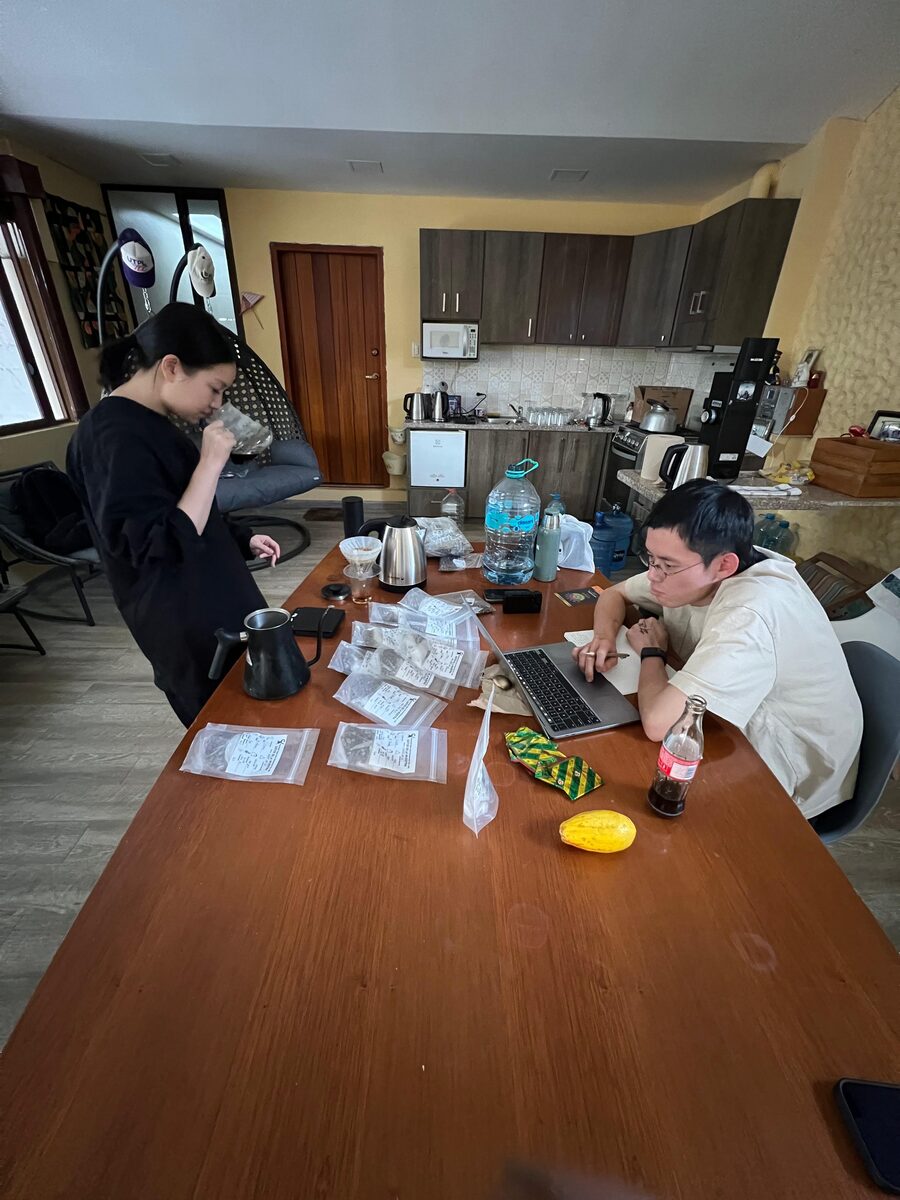
- Continuous Training: Our team does not just sort coffee physically; they also participate in cupping and quality control workshops taught by Fabricio and Ramiro Coronel. By understanding how the defects they discard influence the cup score, the sorters become active sensory analysts.
- Gender Equality in the Chain: By economically valuing this technical specialty, we foster financial independence for women in rural communities where formal employment opportunities for them are historically scarce. This generates a multiplier effect on the education and health of their families.
The work of our sorters transforms the bean, but it also transforms the social structure of our community.
The Human Element in Every Microlot
When a consumer in a specialty coffee shop in Vancouver, New York, or London tastes a cup of Sidra or Typica Mejorado from Hacienda La Florida, they are usually amazed by the notes of jasmine, peach, and its elegant acidity. They attribute this complexity to Sozoranga’s terroir or the hours of anaerobic fermentation.
However, there is an invisible story behind that pristine clarity. That clean cup, free of any harshness or unwanted bitterness, exists solely because one afternoon in Loja, a sorter detected and removed in time the single defective bean that would have ruined the lot.
Coffee excellence is not just the result of geography or industrial physics; it is the sum of thousands of human decisions made with patience and pride. The hands of our sorters are the final stamp of quality for Hacienda La Florida, uniting the technical precision of modern agronomy with the delicacy of artisanal care.
Back to Blog