Of the methods defining the modern landscape of specialty coffee, washed processing (or wet processing) stands as the oldest, most demanding, and most transparent. It is, in essence, a systematic purification: a process that removes every trace of fruit skin and sticky mucilage from the coffee seed before it begins the crucial drying stage. The result is a crystalline cup profile, where nothing stands between the taster’s palate and the genetic potential of the bean, the soil that nurtured its roots, and the microclimate of its origin. At Hacienda La Florida, nestled in the Dry Tropical Forest of Loja, Ecuador, this method is far more than a routine agricultural chore; it is a precision science we practice to lay bare the most honest expression of our unique terroir.
The Philosophy of the Blank Canvas
To appreciate the value of washed processing, one must first understand what this method chooses to omit. In a natural or honey-processed coffee, the sugars and organic compounds present in the fruit’s pulp and skin interact directly with the bean during the drying period, imparting heavy fruit characteristics and fermentation notes. In contrast, the washed process pursues ultimate transparency. By removing all surrounding fruit material prior to drying, the resulting cup is a faithful reflection of the seed’s internal chemistry, built slowly over nine months of maturation at 1,800 meters above sea level.
This transparency makes washed coffees the gold standard for green coffee buyers, roasters, and judges worldwide. It is the only method that allows an unvarnished evaluation of soil health, tree vitality, and agronomic management. If the farm’s soil lacks crucial nutrients, or if the plant suffered from water stress, the washed process will reveal it instantly. It is a blank canvas that does not allow farmers to hide agricultural defects behind heavy fermentative notes or fruit-sugar sweetness.
The Washed Process Step-by-Step at Hacienda La Florida
Achieving this pristine quality requires a meticulous, scientific workflow, where every step is closely monitored by our field and lab teams.
1. Selective Harvesting and Brix Analysis
The journey to an exceptional washed lot begins on the branches of our coffee trees. The hand-harvesting is strictly selective. Our pickers search only for cherries in their absolute prime of color and ripeness, avoiding underripe fruit (which introduces astringency and grassy notes) or overripe cherries (which can kickstart uncontrolled fermentation in the field).
To ensure complete consistency, we run daily refractometer tests on the mucilage juices in the field. We only approve lots that measure between 18 and 22 degrees Brix. This concentration of total soluble solids guarantees that the seed contains the structural sugar precursors and organic acids needed to withstand subsequent fermentation and shine in the final cup.
2. Density Sorting (Floatation)
Immediately after picking, the cherries are transported to our wet mill and submerged in floatation tanks (siphons). Water acts as the first mechanical quality filter. Healthy, fully developed, and dense cherries sink immediately to the bottom. Conversely, low-density cherries—damaged by pests, dehydrated on the tree, or structurally underdeveloped—float to the surface. These “floaters” are skimmed off to prevent them from diluting the clean cup profile of the main microlot.
3. Precision Depulping
The dense cherries that sank are fed into our mechanical depulper. The machine is calibrated to the precise millimeter size of the harvest—a critical adjustment when processing our flagship Typica Mejorado variety. The goal is to gently slice and peel away the outer skin (exocarpio) and most of the fruit flesh (mesocarpio) without nicking or bruising the green coffee bean beneath, which remains protected inside its parchment shell (endocarpio). Any physical damage to the bean or its parchment at this stage creates entry points for wild bacteria, leading to off-flavors during drying.
4. Controlled Fermentation and pH Monitoring
Once depulped, the beans are still covered in a slippery, pectin-rich layer of mucilage. To break this layer down, the coffee is moved to fermentation tanks. Here, native microorganisms (mainly lactic acid bacteria and wild yeasts) begin to hydrolyze the pectin, rendering the sticky mucilage water-soluble.
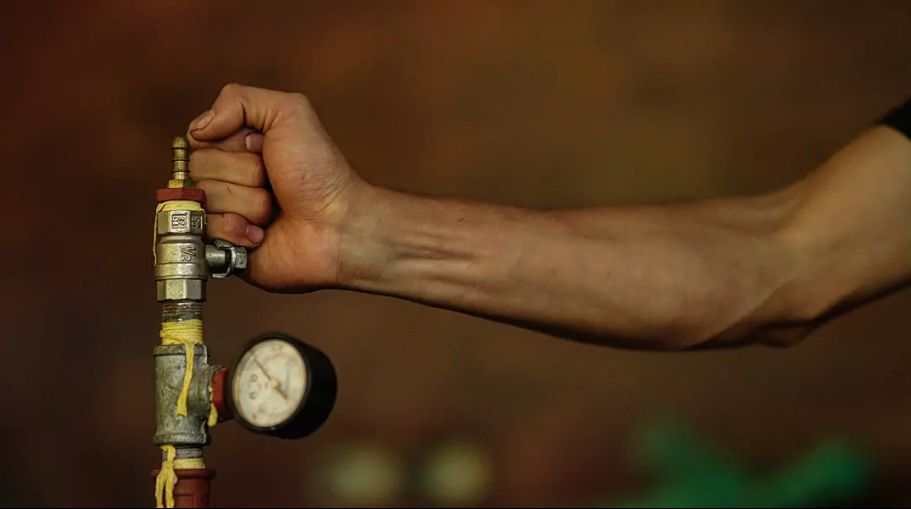
At Hacienda La Florida, we never rely on a clock to determine when fermentation is complete. Ambient temperature and batch density cause the fermentation window to fluctuate widely, from 12 to 36 hours. Instead, our team monitors the tank using digital pH meters. Fermentation is halted with surgical precision when the batch’s pH drops from its initial level of around 6.0 to a target range of 4.5 to 4.6. Halting the process at this exact chemical threshold ensures the mucilage is fully loosened without allowing acetic acid bacteria to take over, which would ruin the cup with vinegar-like notes.
5. Washing and Grading Channels
Once the target pH is reached, the tanks are flooded with clean water, and the coffee is agitated in grading channels (known locally as correoteos). The friction of the flowing water strips away all remaining mucilage residues.
At the same time, the sloped channels act as hydraulic gravity tables. The heaviest, densest beans (Grade 1) travel slowly along the bottom of the channel, while lighter, less developed beans flow quickly to the far end. This separation allows us to divide the lot into distinct physical grades, ensuring only the densest beans advance to the specialty drying phase.
6. Slow, Even Drying on Raised Beds
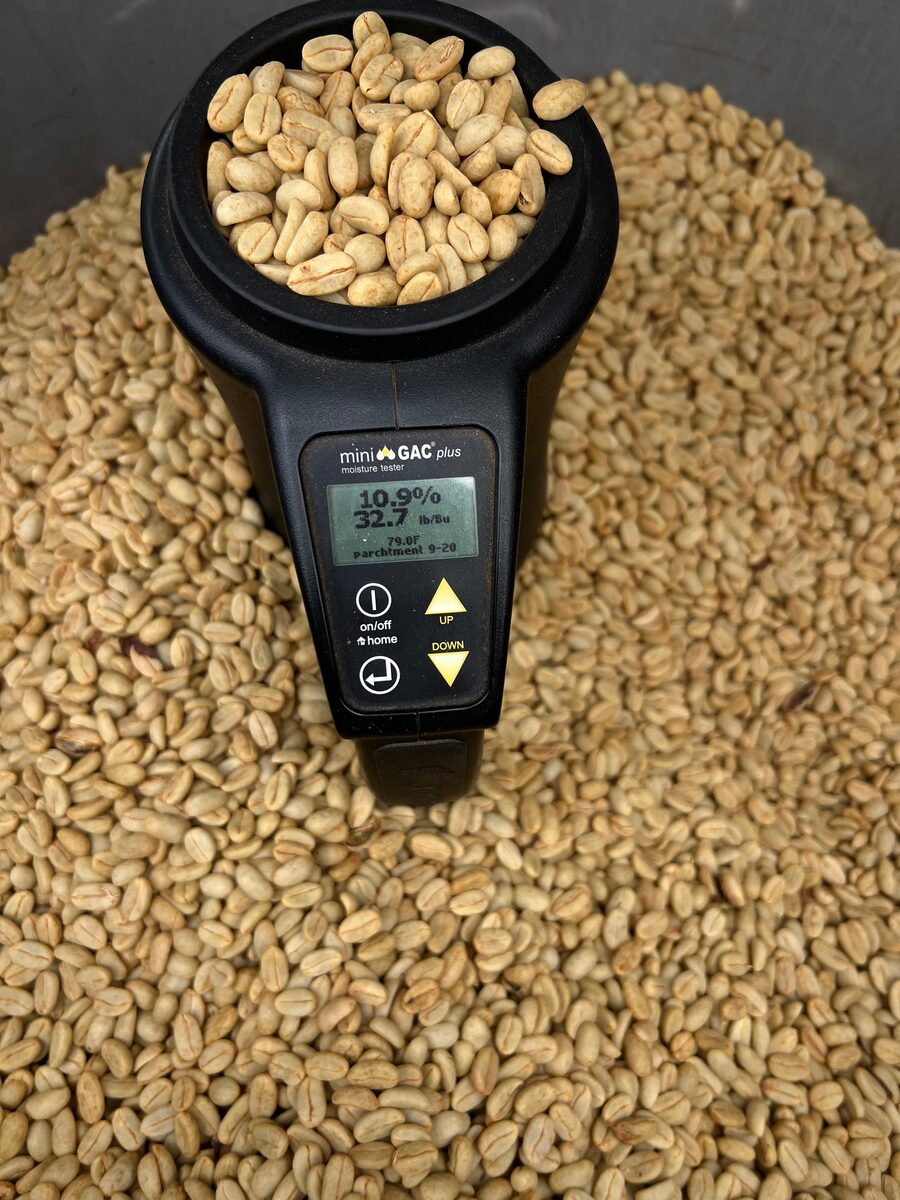
The clean, wet coffee (now called wet parchment) enters the drying stage with a moisture content of roughly 55% to 60%. To guarantee physical stability for vacuum packing and long-term sea export, this moisture must be reduced uniformly to a target range of 10.0% to 12.0%.
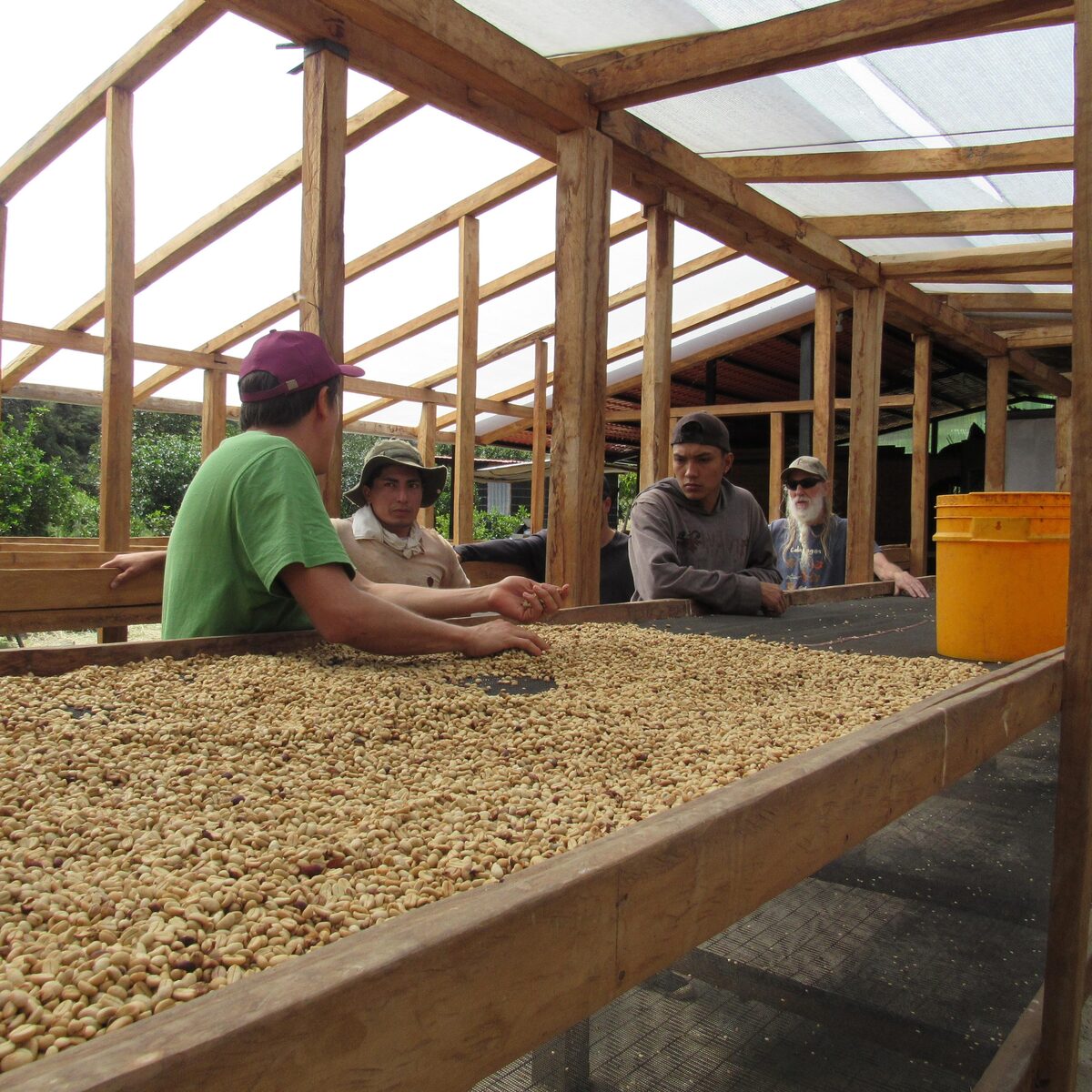
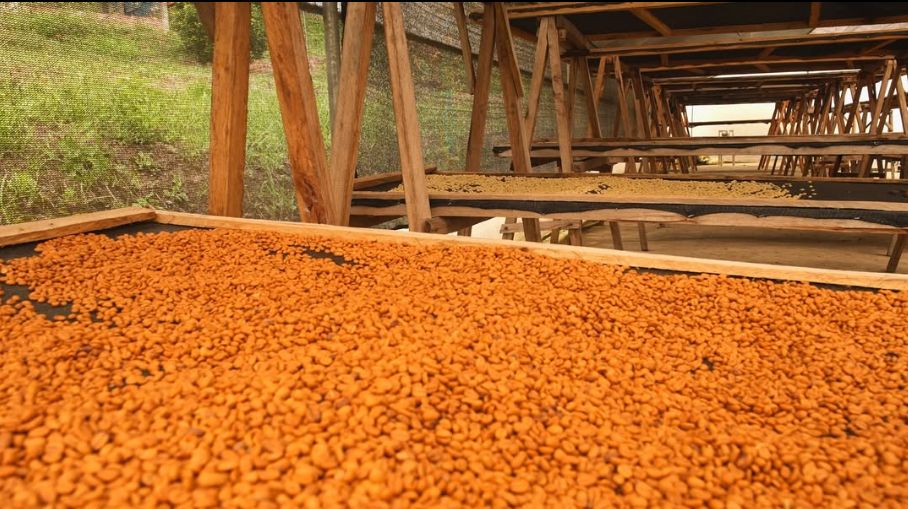
To achieve this, the parchment is spread on raised mesh beds (African beds) in thin layers of 2 to 3 centimeters. The mesh design allows fresh air to circulate freely both above and below the coffee, ensuring uniform moisture loss. During the initial days, the parchment is turned constantly by our team to prevent moisture pockets from encouraging mold growth.
The drying process takes 10 to 20 days depending on Loja’s microclimate. We prioritize a slow, protected path; if the solar radiation is too intense, we pull shade cloths over the beds. Rushing the drying phase causes “case hardening”—a defect where the outer skin of the bean dries and seals too quickly, trapping high moisture in the core, which leads to rapid quality loss and paper-like flavors in storage.
The Sensory Profile of Crystalline Clarity
What does a washed coffee processed under such scientific rigor taste like? When the heavy influence of fruit sugars and active fermentation is removed, the most elegant and delicate flavor descriptors of the plant and microclimate emerge:
- Crisp, Sparkling Acidity: Acidity is the backbone of a great washed coffee. It displays a clean, malic (green apple) or citric (yellow lemon, tangerine) profile that refreshes the palate.
- Delicate Floral and Tea-like Notes: Delicate aromas of jasmine, orange blossom, bergamot, and black tea.
- Pristine Cup Cleanliness: A finish that is exceptionally clean, light, and free of any harshness or muddy ferment notes.
- Unobscured Origin Character: The sensory profile allows coffee lovers to taste the exact soil composition and high-altitude microclimate of Loja.
A brief comparison of physical and sensory attributes by processing method:
| Attribute | Washed Process | Honey Process | Natural Process |
|---|---|---|---|
| Cup Clarity | Exceptionally High | Medium-High | Low to Medium |
| Sweetness Profile | Clean, refined sugars | Rich, honey-like sweetness | Deep, jammy, caramelized |
| Mouthfeel / Body | Light to medium, silky | Medium to full, creamy | Full, heavy, and syrupy |
| Acidity Style | Crisp, citric, and malic | Balanced, juicy | Wine-like, structured |
| Process Risk Level | Low (with pH control) | Medium (sticky parchment) | High (early mold risk) |
Typica Mejorado at Hacienda La Florida
At our farm, the Typica Mejorado variety finds its most noble expression through the washed process. Typica Mejorado is a unique Ecuadorian variety that combines the cup quality and complexity of Typica with the agricultural vigor of its Bourbon ancestry. When processed washed, its citric complexity and sweet black tea notes shine with unparalleled brightness.
A classic example of our work is the Typica Mejorado Double Washed, roasted by NormlPpl. This lot undergoes a double-stage fermentation phase before its final washing. This process intensifies the clarity of the acidity and elevates the jasmine-like aromatics, serving as a textbook demonstration of how physical and chemical controls preserve the variety’s genetic potential.
Sustainable Water Management in Wet Milling
Historically, the washed process has been criticized for its heavy water footprint. Traditionally, large volumes of fresh water were used to transport cherries and flush out fermentation tanks. At Hacienda La Florida, we manage Loja’s delicate ecosystem by implementing a responsible, circular water model.
We utilize modern, dry-depulping equipment that does not require water to transport cherries into the machine. Additionally, our washing channels are designed with internal recirculation pumps, reducing the fresh water required per kilogram of parchment by over 60%. Finally, all acidic wastewater (known as aguas mieles), rich in organic matter, is routed to sedimentation ponds and biological filtration systems. Here, the pH is neutralized, and organic solids are broken down before clean water is returned safely to the natural environment.
The Connoisseur’s Choice
Washed processing is not the path of least resistance. It requires constant capital investment, micro-calibrations, and a strict control of chemical and thermodynamic variables. However, for our team at Hacienda La Florida, it is an indispensable pursuit.
To choose a washed coffee is to choose clarity in every sip. It is the preferred choice of craft roasters who want to roast without masking the origin, of Q Graders who want to evaluate terroir without a ferment curtain, and of coffee lovers who value nuance, elegance, and balance over loud, rustic flavors. Every cup of our washed coffee is a clean, bright window into the Andean slopes of Loja.
To explore the full spectrum of coffee craft, read our guide on the natural process, where the cherry dries whole for maximum body, or discover the honey process, which balances both worlds. Remember that the foundation of any outstanding process lies in rigorous drying protocols.
Back to Blog