Among the complex set of agronomic and environmental variables that dictate the destiny of a specialty coffee—ranging from soil chemistry to fermentation techniques—altitude above sea level stands out as the most reliable and decisive predictor of cup quality. While it is not an absolute guarantee (as poor harvesting or careless drying can ruin the best of crops), altitude establishes the biological ceiling of the plant’s flavor potential.
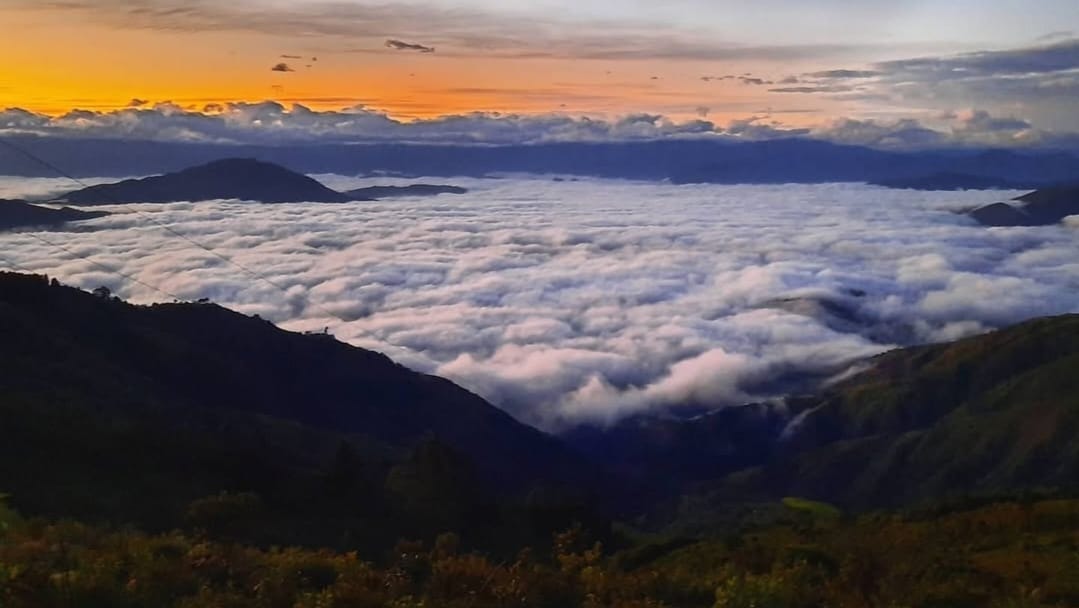
At Hacienda La Florida, our coffee plantations span an elevation gradient from 1,500 to 1,700 meters above sea level (masl), with specific micro-plots reaching 1,800 masl. This geographic range is not just a coordinate on a map; it is the invisible engine that drives the aromatic complexity, acidity structure, and physical density of every bean we harvest in Sozoranga, Loja.
Plant Physiology at High Elevations: The Science of Slow Maturation
To understand why high-altitude coffee possesses superior quality, we must examine the botany and metabolism of the species Coffea arabica. Coffee is native to the understory forests of the Ethiopian highlands, adapted to stable, temperate conditions.
As we ascend in elevation, atmospheric pressure drops and the average temperature decreases at a steady rate of approximately 0.6°C for every 100 meters of elevation. This thermal decline has a direct effect on the development of the coffee fruit:
At lower elevations (below 1,200 masl), warm temperatures accelerate the coffee plant’s metabolic processes. The cherries ripen quickly, completing their cycle in as little as 30 weeks. This rushed maturation prevents the bean from accumulating complex chemical compounds; sugars are synthesized and consumed rapidly, resulting in soft beans with simple flavor profiles, low acidity, and thin body.
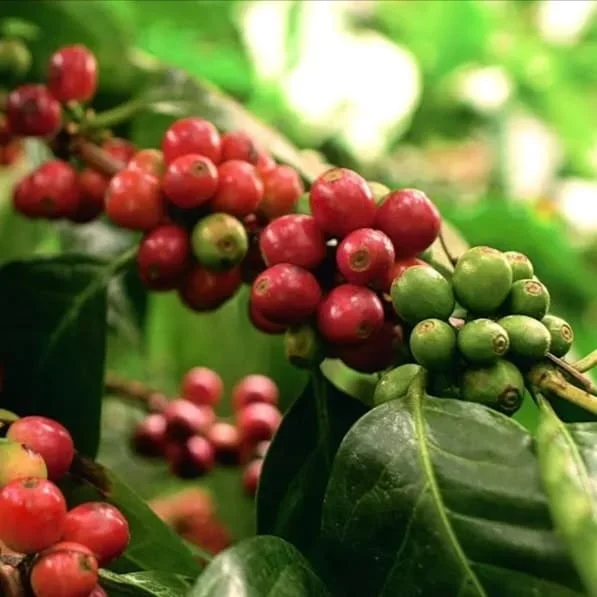
Conversely, at high elevations (between 1,500 and 1,800 masl), cooler temperatures slow the fruit’s cellular growth. The coffee cherry takes 34 to 36 weeks (and even longer at extreme altitudes) to reach optimal commercial maturity. Every additional week the cherry remains attached to the branch acts as a nutrient transfer window: the plant has more time to channel sucrose, lipids, organic acids, and aromatic precursors directly into the endosperm (the coffee bean).
Photosynthesis vs. Cellular Respiration: The Thermal Differential
One of the most fascinating physiological phenomena occurring at high altitude is the balance between daytime photosynthesis and nighttime cellular respiration in the coffee plant. This chemical cycle is responsible for the sweetness and structure of the coffees produced in Sozoranga.
The cycle works as follows:
- Daytime Photosynthesis (Sugar Production): During the day, the slopes of Hacienda La Florida receive intense, clear solar radiation typical of the Tumbesian Region. The coffee leaves perform photosynthesis at their maximum capacity, combining water from the soil and carbon dioxide from the atmosphere to produce sucrose (sugars) and starches.
- Nighttime Cellular Respiration (Sugar Consumption): At night, the sun sets and the plant stops photosynthesis, starting cellular respiration to maintain its vital functions. In this process, the plant consumes the sugars it synthesized during the day. The rate of this consumption depends directly on the nighttime temperature: if the nights are warm, the plant’s metabolism accelerates, consuming a large portion of its energy reserves.
- The Altitudinal Thermal Differential: At 1,600 masl in Sozoranga, the nights are notably cold due to the altitude and mountain breezes. This nighttime temperature drop induces a state of metabolic rest in the plant, drastically reducing sugar consumption during respiration.
As a result of this thermal differential (warm, sunny days combined with cold nights), the coffee tree has a surplus of accumulated sugars at the end of its development cycle. This net gain in sucrose is the reason why high-altitude beans possess their characteristic natural sweetness and a more complex flavor structure.
The Physics and Chemistry of the Dense Bean: Strictly Hard Bean (SHB)
In the international green coffee trade, coffees grown at high altitudes are classified under the grade Strictly Hard Bean (SHB). Physical bean density is not just a commercial specification; it is an indirect measure of the concentration of soluble solids in the coffee.
At the cellular level, slow maturation at low temperatures produces smaller, more compact plant cells with thicker cell walls and fewer inter-cellular air spaces. Chemically, this density translates to a higher concentration of:
- Lipids: Essential compounds for retaining volatile aromas and contributing to the oily, velvety texture of the body in the cup.
- Chlorogenic and Organic Acids: Precursors to citric, malic, and phosphoric acids that give the coffee its brightness and structure.
- Sucrose: Which actively participates in the thermal chemical reactions of roasting.
| Elevation Range (masl) | Ripening Duration | Bean Density | Typical Sensory Profile |
|---|---|---|---|
| Low (< 1,200 masl) | Fast (30 weeks) | Low (soft bean) | Light body, flat acidity, simple earthy and herbal notes |
| Medium (1,200 - 1,500 masl) | Moderate (32 weeks) | Medium | Balanced body, moderate acidity, standard chocolatey notes |
| High (1,500 - 1,700 masl) | Slow (34 - 36 weeks) | High (hard bean / SHB) | Bright acidity (citric/malic), pronounced sweetness, creamy body |
| Extreme (> 1,700 masl) | Very slow (> 36 weeks) | Maximum (strictly hard) | Intense acidity, outstanding floral and fruit clarity, jasmine and exotic fruit notes |
The Behavior of Dense Beans in the Roaster
For a specialty coffee roaster, bean density is a critical factor when designing a roast profile. The dense beans grown at 1,600 masl at Hacienda La Florida behave very differently from the soft beans of low-elevation regions:
- Thermal Conductivity: Due to their compact cellular structure and the absence of internal air pockets, dense beans conduct heat more efficiently and uniformly from the surface to the core of the bean. This allows for a homogenous internal development of the bean without scorching the outer surface.
- Initial Heat Resistance: They can withstand a higher charge temperature at the beginning of the roast, accelerating the drying phase without generating conduction defects such as face-scorching.
- Steam Pressure and Maillard Reactions: The high concentration of sugars and amino acids within the dense cell matrix of the bean generates strong internal steam pressure during roasting. This optimizes Maillard reactions and sucrose caramelization, releasing a greater quantity of volatile aromatic compounds at the moment of the first crack.
Terroir Synergy: Altitude + Dry Forest Microclimate
While altitude alone is a powerful quality factor, its interaction with the local microclimate is what defines the true character, or terroir, of a coffee. At Hacienda La Florida, altitude meets the unique ecosystem of the Tumbesian Dry Tropical Forest.
In a traditional, humid high-altitude forest, constant moisture buffers temperatures and keeps the plant hydrated. However, in the dry forest of Sozoranga, the combination of high altitude and the severe dry season places controlled stress on the coffee tree. This dual stimulus—mountain cold and seasonal dryness—forces the plant to concentrate an extraordinarily high amount of sugars in its fruit as a survival mechanism.
In the cup, this synergy produces a profile that perfectly balances citric and malic acidity with a deep sweetness of caramel and chocolate, and a clarity of flavor that lingers long into the aftertaste.
Sozoranga: Altitude as a Commitment to Excellence
The choice to cultivate specialty coffee at 1,500–1,700 masl in the Loja province is not accidental. This region of the southern Ecuadorian Andes offers the ideal conditions of altitude, soil, and microclimate for demanding varieties like Sidra, Typica Mejorado, and Catucai 2SL to showcase their full genetic potential.
At Hacienda La Florida, we understand that altitude is a gift from geography, but also a daily commitment to hard work on steep slopes. Every extra meter of altitude that makes manual harvesting more difficult is, at the same time, a biological investment in the sweetness, acidity, and complexity of every cup of coffee we produce.
Continue reading: the Dry Forest ecosystem that defines our unique terroir, and the story behind Hacienda La Florida — Ecuador’s award-winning specialty coffee estate.
Back to Blog