The Science of Taste: Q Graders and Quality Control
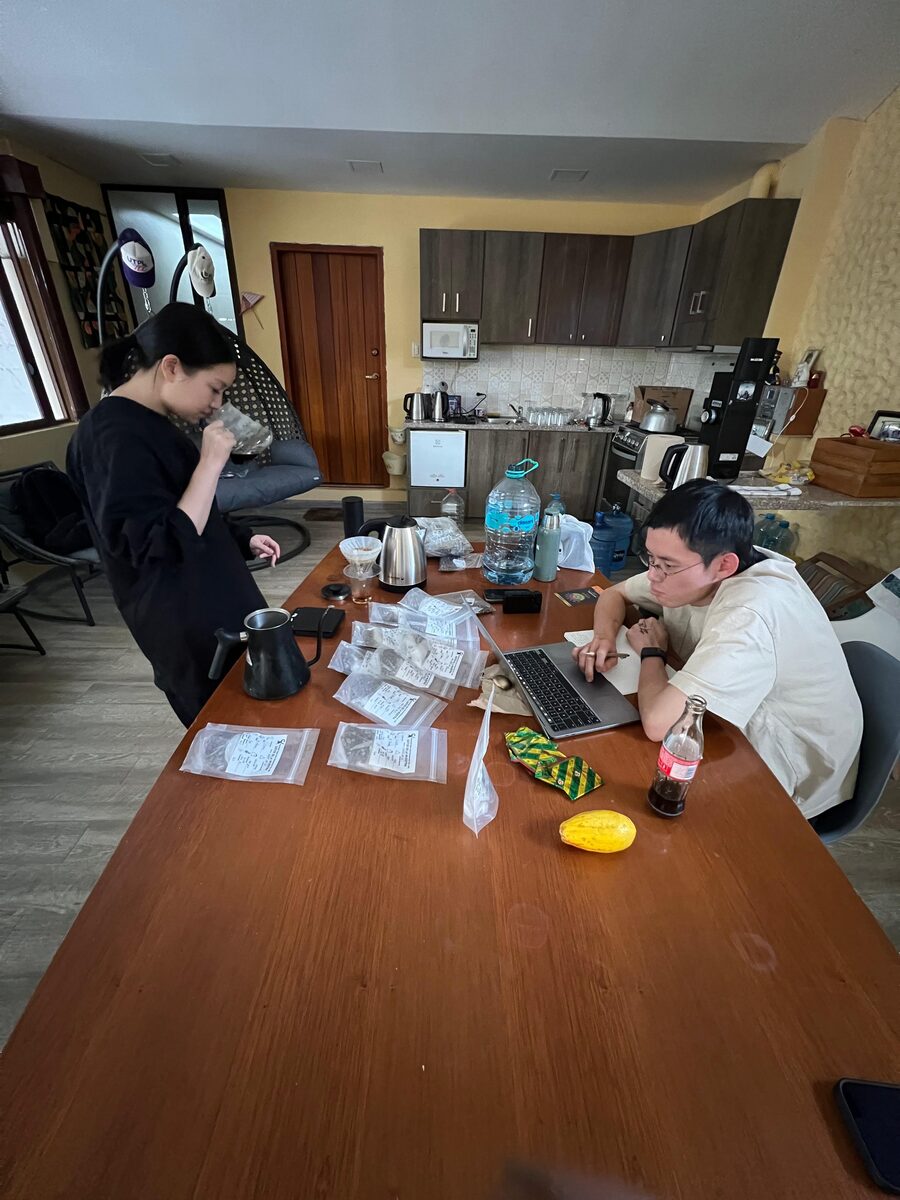
In the world of specialty coffee, quality is not a matter of personal opinion. It is a measurable, standardized discipline. When a roaster in San Francisco, Tokyo, or Oslo purchases a microlot, they expect a precise flavor profile and physical standard.
To bridge the gap between production and expectations, the coffee industry relies on sensory evaluation and the gold standard of professional tasting: the SCA Q Grader certification. At Hacienda La Florida, this rigorous methodology is built directly into our operations, led by the Coronel brothers, Fabricio and Ramiro, who are both certified Q Graders.
What is a Q Grader?
Administered by the Coffee Quality Institute (CQI) and aligned with Specialty Coffee Association (SCA) standards, the Q Grader certification is often compared to a wine sommelier license, but with an intense focus on sensory calibration and technical analysis.
To earn this title, professionals must pass a grueling series of 22 exams over six days. These include:
- Sensory Skills: Identifying varying intensities of sweet, sour, and salty solutions.
- Cupping Tests: Scoring and profiling coffees from all major growing regions (Asia, Africa, Central, and South America).
- Triangulations: Detecting the odd coffee out among three cups, under dim red lights to eliminate visual bias.
- Organic Acid Identification: Recognizing specific acids (citric, malic, phosphoric, acetic) added to coffee.
- Green Coffee Grading: Identifying and counting physical defects in green beans.
Because Q Graders must renew their credentials every three years through calibration exams, they maintain a highly trained palate that is aligned with the international specialty market.
The Lab at Hacienda La Florida: Complete Quality Control
Having one Q Grader on a farm is a luxury; having two is a complete guarantee of consistency. Fabricio and Ramiro Coronel apply their academic training from Zamorano and their Q Grader credentials to monitor every single stage of post-harvest processing.
In our dedicated quality lab, every microlot undergoes physical and sensory evaluation:
- Moisture & Density Testing: Checking the green coffee to ensure it meets export standards (between 10% and 12% moisture).
- Sample Roasting: Using a laboratory roaster to roast small batches under strict time and temperature curves.
- SCA Cupping Protocols: Cupping the roasted samples using standard water-to-coffee ratios, temperature, and scoring sheets (evaluating fragrance, aroma, flavor, aftertaste, acidity, body, balance, uniformity, clean cup, and sweetness).
By cupping every lot multiple times, Fabricio and Ramiro can track how different fermentation profiles, yeast inoculations, or drying times affect the final score. If a batch does not meet our high standards, it is separated and never exported as a top-tier microlot.
Standardizing the Language of Coffee
The true value of the Q Grader certification lies in standardization. It provides us with a universal vocabulary to speak with buyers. When Fabricio and Ramiro score a Sidra lot at 88.5 points with notes of white peach, jasmine, and citrus acidity, a green buyer on the other side of the world knows exactly what that means.
By aligning our farm’s laboratory with global standards, Hacienda La Florida ensures that the coffee we ship is exactly what we promise. This uncompromising commitment to quality control is why our coffees continue to be featured by the world’s most demanding roasters and specialty cafés.