The sun that illuminates the steep valleys of Loja, in southern Ecuador, plays a decisive role in our wet mill. In these lands of Andean dry forest climate, coffee does not only grow by adapting to rigorous weather conditions; it is physically transformed on our drying beds. Honey processing, also known as pulped natural or semi-washed processing, embodies the most perfect balance between two worlds that were traditionally considered opposites: the sparkling clarity and freshness of a washed process, and the dense, indulgent sweetness of a natural process.
Despite its evocative name, honey processing has nothing to do with bee honey. The term pays tribute to the visual appearance and physical consistency of the parchment coffee during drying: beans covered by a golden, sticky, and densely sweet layer of mucilage. At Hacienda La Florida, we have turned this method into a field of scientific research, decoding the physics of dehydration and the biochemistry of the living bean to create high-precision cup profiles.
The Science of Mucilage: A Second Skin of Nutrients
To understand the complexity of the honey process, it is essential to analyze what mucilage is from a chemical perspective. This gelatinous substance coating the coffee seed is primarily composed of water (84%), soluble sugars such as sucrose, glucose, and fructose (12%), pectic compounds (3%), and proteins and organic acids (1%).
When the coffee is depulped, the calibrated depulping machines at Hacienda La Florida strip the outer skin of the cherry (flavedo), leaving a controlled percentage of this mucilage adhered to the parchment. From this moment on, the mucilage acts as a concentrated source of nutrients and energy for the surrounding environment, but also for the seed itself.
Unlike washed processing, where the mucilage is completely removed before drying through liquid fermentation or mechanical friction, in honey processing the mucilage is dehydrated directly on the bean. This simple fact radically alters the thermodynamics of drying and the internal chemical reactions.
“The sugar-rich mucilage acts as an osmotic shield and a metabolic reserve. During slow drying, the coffee seed—which remains a living and metabolically active organism—responds to the high external concentration of sugars and the evaporation of water, modifying its internal pool of flavor precursor compounds.”
Enzymatic Activity and Water Stress in the Seed
During the first days of drying honey coffee, the living bean experiences dehydration stress. As long as the water activity (aw) does not drop below 0.6 (the biological threshold where enzymatic activity halts), the seed continues to breathe. Being surrounded by the sugars and pectins of the mucilage, the cellular respiration rate and the internal breakdown of starches into simple sugars change.
If the drying is slow and well-modulated, the seed metabolizes these sugars and free amino acids at a more leisurely pace, resulting in a higher concentration of reducing sugars that will caramelize exquisitely during roasting, yielding unparalleled sweetness in the cup.
The Honey Spectrum: Biochemistry of Color and Drying
At Hacienda La Florida, the color of honey coffee is not determined aesthetically; it is the physical and chemical reflection of the amount of mucilage retained and the rate of water evaporation under different levels of solar radiation. We control this spectrum through three distinct styles:
1. White Honey (Fast Drying, 25% Mucilage)
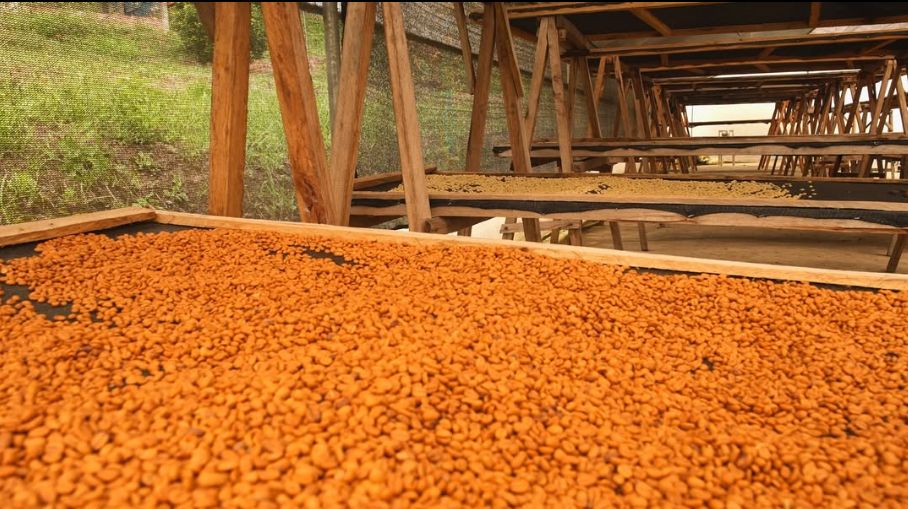
In White Honey, the depulper is calibrated to remove most of the mucilage, leaving approximately one-quarter of the sticky pulp on the parchment. The beans are immediately spread under direct sunlight on raised beds made of fine mesh to ensure rapid moisture loss.
- Process Chemistry: Rapid surface dehydration almost immediately stops any external bacterial fermentation in the mucilage and limits the oxidation of polyphenols present in the pulp (which, by not oxidizing, keeps the parchment a very clean, creamy white color).
- Sensory Profile: Produces a cup of extremely high aromatic clarity, with a bright citric acidity very similar to a washed coffee, but with a slightly silkier body and sweet notes evoking peach, apricot, and white tea.
2. Yellow Honey (Intermediate Drying, 50% Mucilage)
Half of the gelatinous layer is retained. The coffee is dried on beds with moderate sun exposure or under partial shade during peak radiation hours to slow down moisture loss.
- Process Chemistry: The moderate drying speed allows a mild, aerobic lactic fermentation to occur in the external mucilage. Polyphenols begin to oxidize slightly due to exposure to humid air, staining the parchment a golden-yellow hue.
- Sensory Profile: A highly balanced cup. The acidic brightness softens and integrates with sweet notes of raw honey, nectarine, and caramelized citrus peel.
3. Red Honey (Slow Drying, 75% to 100% Mucilage)
Practically all of the mucilage is retained on the bean. The wet beans are moved to beds located under dense shade or in our climate-controlled dark room with a constant temperature of 18°C and 50% relative humidity.
- Process Chemistry: The slow dehydration and large volume of mucilage foster a prolonged mixed fermentation (aerobic on the outside and anaerobic in the lower layers of the piled coffee). The sugars in the mucilage gradually concentrate and undergo polyphenol oxidation reactions and surface enzymatic caramelization catalyzed by ambient light, tinting the parchment a sticky, dark red color.
- Sensory Profile: Delivers a full-bodied coffee with a syrupy texture. The sweetness is deep and intense, with notes of red berry jam, prune, chocolate, and a rounded, refined lactic acidity.
Comparative Table of Honey Processing at Hacienda La Florida
| Honey Type | Retained Mucilage | Solar Exposure & Environment | Drying Days | Key Chemical Compounds | Target Cup Profile |
|---|---|---|---|---|---|
| White Honey | ~25% | Direct (Sun-exposed raised beds) | 8 - 10 days | Stable citric acid, minimal oxidation | Bright acidity, white tea, peach, clean finish |
| Yellow Honey | ~50% | Partial shade / Moderate sun | 11 - 14 days | Balanced malic acid, partial oxidation | Cane honey, mandarin, silky body, balance |
| Red Honey | ~75% - 100% | Dense shade / Dark room | 15 - 20 days | Elevated lactic acid, ripe fruit esters | Blackberry jam, syrupy body, prune, liqueur |
The Art of Drying and Defect Prevention
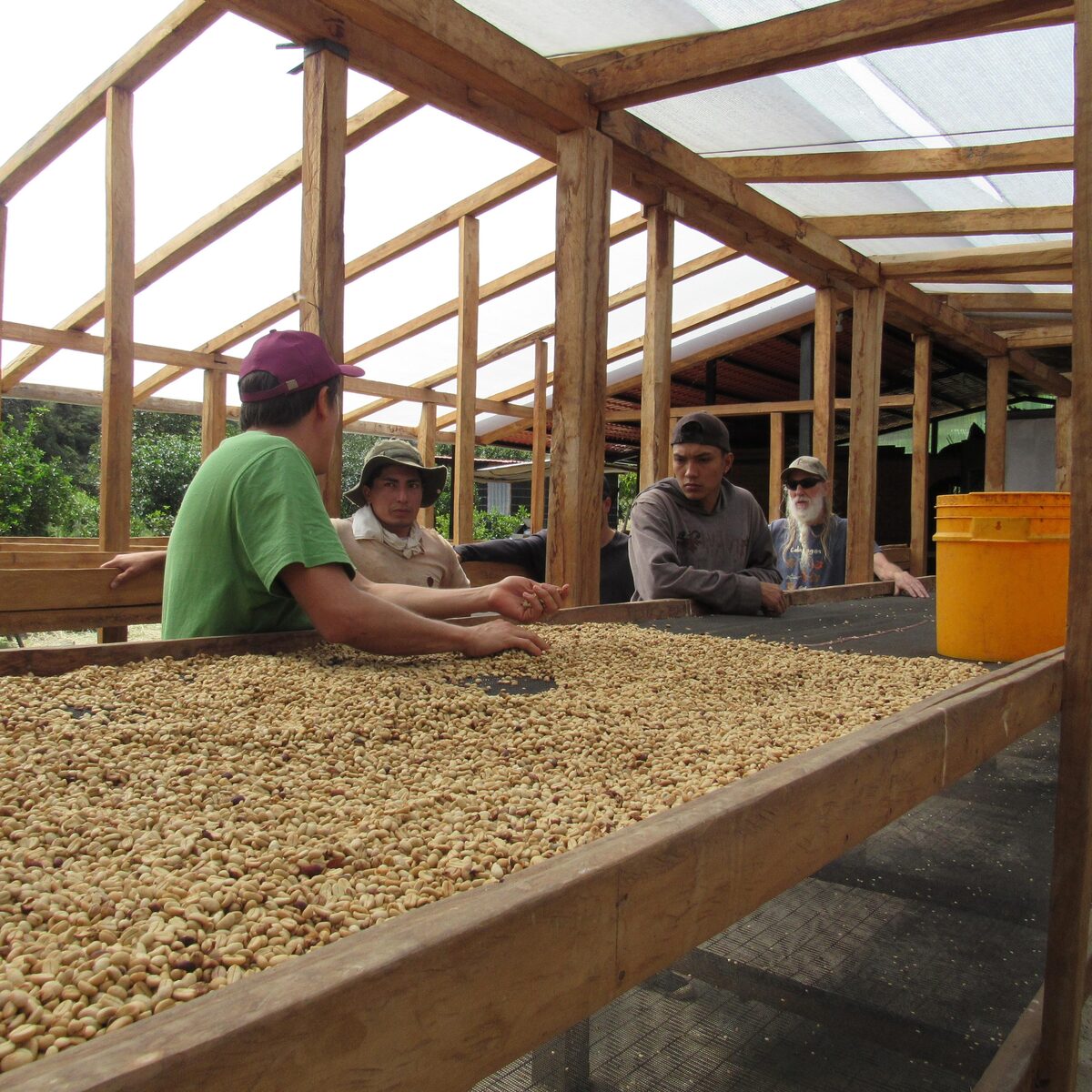
Honey processing is physically one of the most demanding processes on the farm. Due to the high sugar density and the viscous nature of the mucilage pectins, the beans tend to clump together and form dense masses on the drying beds.
If the coffee is left stationary on the raised beds, humid air becomes trapped between the clumps of beans, creating microenvironments favorable for the rapid proliferation of acetic acid bacteria and mold spores (Aspergillus). This would ruin the entire batch, causing rotten vinegar notes and metallic astringency.
To prevent this, our wet mill team performs constant and systematic physical labor. During the first four days of drying, when the mucilage is stickiest, the beans are turned every 30 to 45 minutes using wooden rakes designed not to damage the parchment. Constant movement ensures that each seed receives uniform airflow and dehydrates at a steady rate, breaking up clumps and guaranteeing batch homogeneity.
The Sidra Variety and the Honey Process: Terroir Synergy
The honey process acts as a focusing lens: it does not create new flavors from scratch, but rather amplifies or softens the intrinsic characteristics of the variety and the soil where it grows. The emblematic Sidra variety of Hacienda La Florida, known internationally for its extraordinary floral complexity inherited from its Ethiopian lineage, finds its best ally in the honey process.
Our White Honey Sidra, exceptionally roasted by our Canadian partners at Sorellina Coffee, perfectly illustrates this synergy.
By preserving a thin 25% layer of mucilage and drying quickly in the sun, we manage to keep the hyper-delicate floral notes of jasmine, lavender, and orange blossom inherent to Sidra’s genetics completely intact. Simultaneously, the mild sugar stress from the mucilage contributes a crisp sweetness of clementine, mandarin, and raw honey that softens the variety’s natural citric acidity, giving the cup a silky body and an extremely elegant finish that persists on the palate for minutes.
“The Honey process does not seek to mask the terroir, but to refine the acidity and dress the bean in a velvety sweetness that respects the flowery origin of our Loja mountains.” — Fabricio Coronel, Co-founder.
Hacienda La Florida demonstrates with its Honey lots that fine coffee cultivation is a harmonious conjunction of agricultural patience, drying physics, and scientific rigor. By domesticating the viscosity of the mucilage, we achieve cups of superlative sweetness and clarity that represent the Andean soul in every sip.
Back to Blog